
A car that will not start, has failed its MOT, or has become too expensive to repair can feel like a problem sitting on your driveway. If you have searched, “how does cash for scrap cars work ? 07944 495 495,” the short answer is simple: provide the vehicle details, accept a clear quote, arrange free collection, receive secure payment, and make sure the vehicle is processed legally.
The details matter because a proper vehicle disposal service should do more than remove a car. It should give you a fair valuation, collect it when agreed, pay you safely, and help ensure the ownership record is handled correctly. That is what turns an unwanted vehicle into a straightforward transaction rather than another job on your list.
How Does Cash for Scrap Cars Work?
The process begins with a quote. You will normally be asked for the registration number, make and model, approximate location, and a truthful description of the vehicle’s condition. Mention whether it starts, has accident damage, is missing keys, has flat tires, or is parked somewhere with limited access. These details allow the collection team to plan properly and give a price that is less likely to change on arrival.
The offer is based on several factors. Vehicle weight, current metal values, age, model, condition, collection distance, and whether the car is complete can all affect the figure. A newer accident-damaged vehicle may have a different value from an older non-runner, even if neither is suitable for driving. Prices can also move with market conditions, so a quote is usually most useful when you are ready to arrange collection.
Once you accept the offer, collection is booked for a convenient time. A professional operator will collect vehicles from homes, garages, workplaces, recovery compounds, and roadside locations where access is safe and permitted. You should not need to arrange transport yourself or pay a separate towing charge when free collection has been agreed.
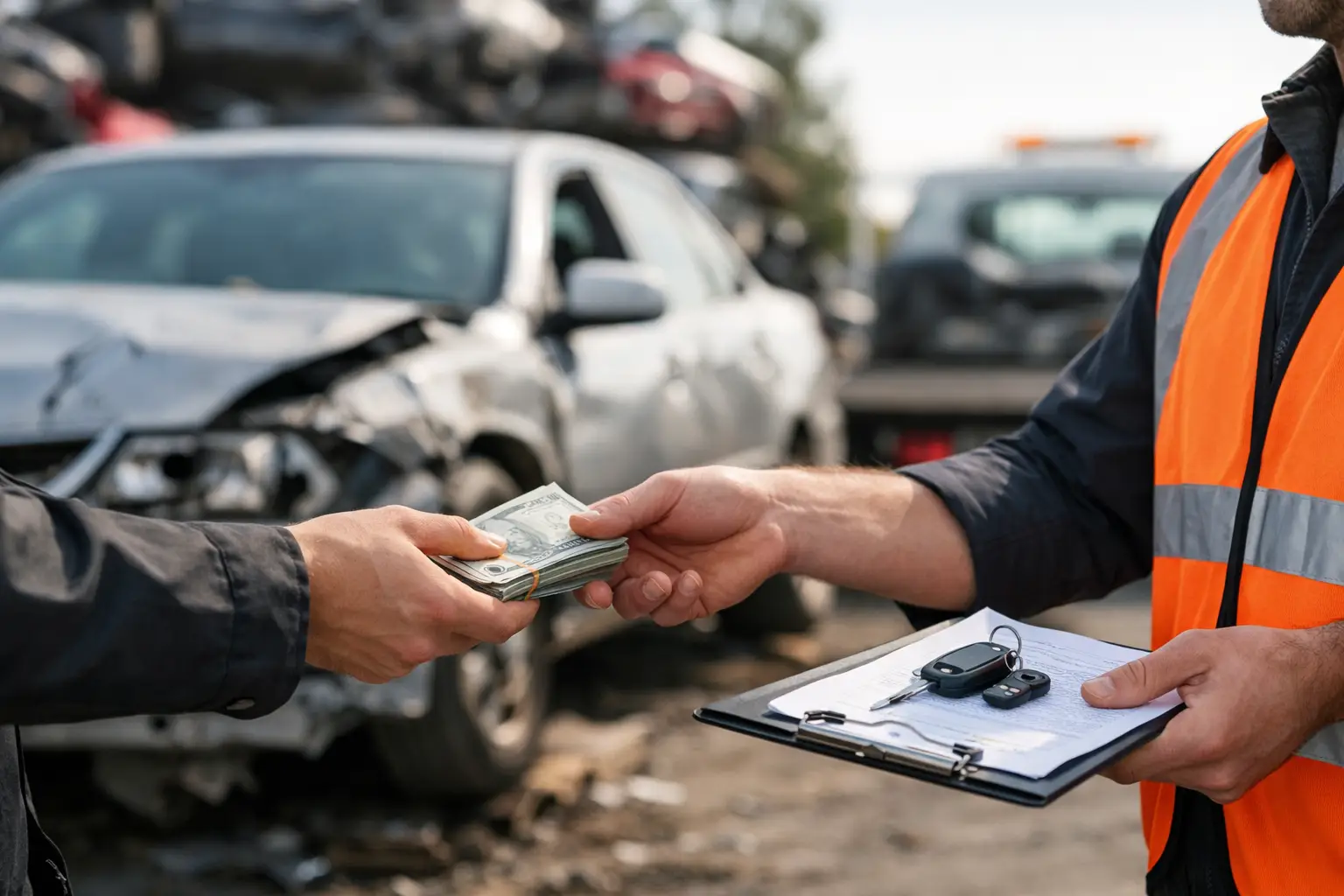
At collection, the driver checks that the vehicle matches the details supplied. Assuming the description is accurate, payment is made by bank transfer and the vehicle is loaded for transport to an authorized treatment facility. The vehicle is then depolluted and recycled in line with the required environmental process.
“Cash” Usually Means Fast Payment, Not Paper Bills
The phrase cash for scrap cars is widely used, but UK scrap-metal rules mean a legitimate operator cannot pay for a vehicle with physical cash. Secure bank transfer is the normal compliant method. It gives you a payment record, reduces the risk of carrying money, and helps keep the transaction transparent.
Before collection, confirm how and when payment will be sent. In many cases, it is arranged while the driver is present, subject to bank processing times. Make sure the account details you provide are correct, and do not release the vehicle until you are satisfied that the agreed payment process has been followed.
What You Need Before Your Car Is Collected
Having the right information ready prevents delays. The V5C registration document is helpful, but do not assume you cannot dispose of the vehicle without it. If the V5C has been lost, a legitimate buyer can explain the available options and the information needed to proceed.
You will also usually need photo identification and proof that you are entitled to sell the vehicle. If the car belongs to a family member, a business, or an estate, ask what additional authorization may be required. Clear ownership checks protect both the seller and the buyer.
Before the vehicle leaves, remove all personal belongings. Check the glove box, center console, door pockets, trunk, under-seat storage, and any phone mounts. Delete saved addresses, contacts, and garage-door codes from the vehicle’s infotainment system if it still has power. Keep private documents, parking permits, service records you want to retain, and anything attached to the keys.
It is also sensible to take photos of the vehicle and note its condition before collection. This is not about creating extra work. It gives you a simple record of the car, its registration, and the handover date should you need to refer back to the transaction.
The DVLA Step You Should Not Skip
Collection alone does not automatically remove your responsibility for the vehicle. You must notify the DVLA that you have sold or transferred it to the relevant motor trader or authorized treatment facility. This can normally be done online, and it is best handled as soon as the vehicle has been collected.
Keep any confirmation you receive. It is your evidence that you have informed the DVLA and helps protect you from future tax, parking, or enforcement correspondence connected to the vehicle. If you have a V5C, use the relevant section and follow the current DVLA process carefully.
A Certificate of Destruction may be issued when a vehicle is officially destroyed by an authorized treatment facility. Not every collected vehicle will generate one in every situation, so do not treat it as the only proof you need. Your DVLA notification confirmation and payment record are equally important documents to retain.
Why Honest Vehicle Details Protect Your Price
The quickest transactions are the ones with no surprises. If a vehicle is described as complete and rolling but arrives with major components removed, no wheels, or no safe access for loading, the original quote may no longer apply. The collection team may need different equipment, extra time, or may be unable to remove it safely at all.
Be especially clear about keys and access. A locked vehicle, an electronic parking brake, a narrow driveway, underground parking, or a car blocked by other vehicles can change the collection plan. None of these situations necessarily stops a collection, but the buyer needs to know before setting out.
The same applies to damage. Flood exposure, fire damage, severe collision damage, and an insurance write-off can all be collected in many cases. Give an accurate description and share photos if requested. A transparent quote is built on accurate information, not on vague promises that disappear when the driver arrives.
When Selling for Scrap Is the Right Choice
Scrapping is often the practical option when repairs exceed the vehicle’s value, the car has failed an MOT with costly faults, it has been sitting unused for months, or selling privately would involve more effort than it is worth. It can also make sense for non-runners, heavily damaged cars, and vehicles with expired insurance or tax that cannot legally be driven away.
It is not always the highest-price route. A roadworthy, desirable vehicle may be worth more through a private sale, while a repairable damaged car could have value through a specialist buyer. The trade-off is time, uncertainty, viewings, negotiation, and the risk of a buyer failing to collect. For many owners, a firm quote, free collection, and prompt payment are worth more than chasing a slightly higher figure.
Choosing a Reliable Collection Service
Look for a service that explains the process without pressure. You should know the quoted price, whether collection is free, the payment method, what documents are needed, and how the vehicle will be handled after pickup. Be cautious of vague offers, last-minute price reductions without a genuine reason, or anyone who cannot explain their licensing and disposal process.
Scrap Car Kings focuses on the practical details that matter to owners across London, Essex, and surrounding areas: clear quotations, scheduled collection, secure bank transfer, and compliant handling of end-of-life vehicles. A professional service should make the handover feel organized, not rushed or uncertain.
If your car has reached the point where repairs, storage, or private selling no longer make sense, gather the registration details, describe its condition honestly, and ask for a clear quote. A properly managed collection can clear your space, put money in your account, and leave you confident that the vehicle has been dealt with responsibly.


