
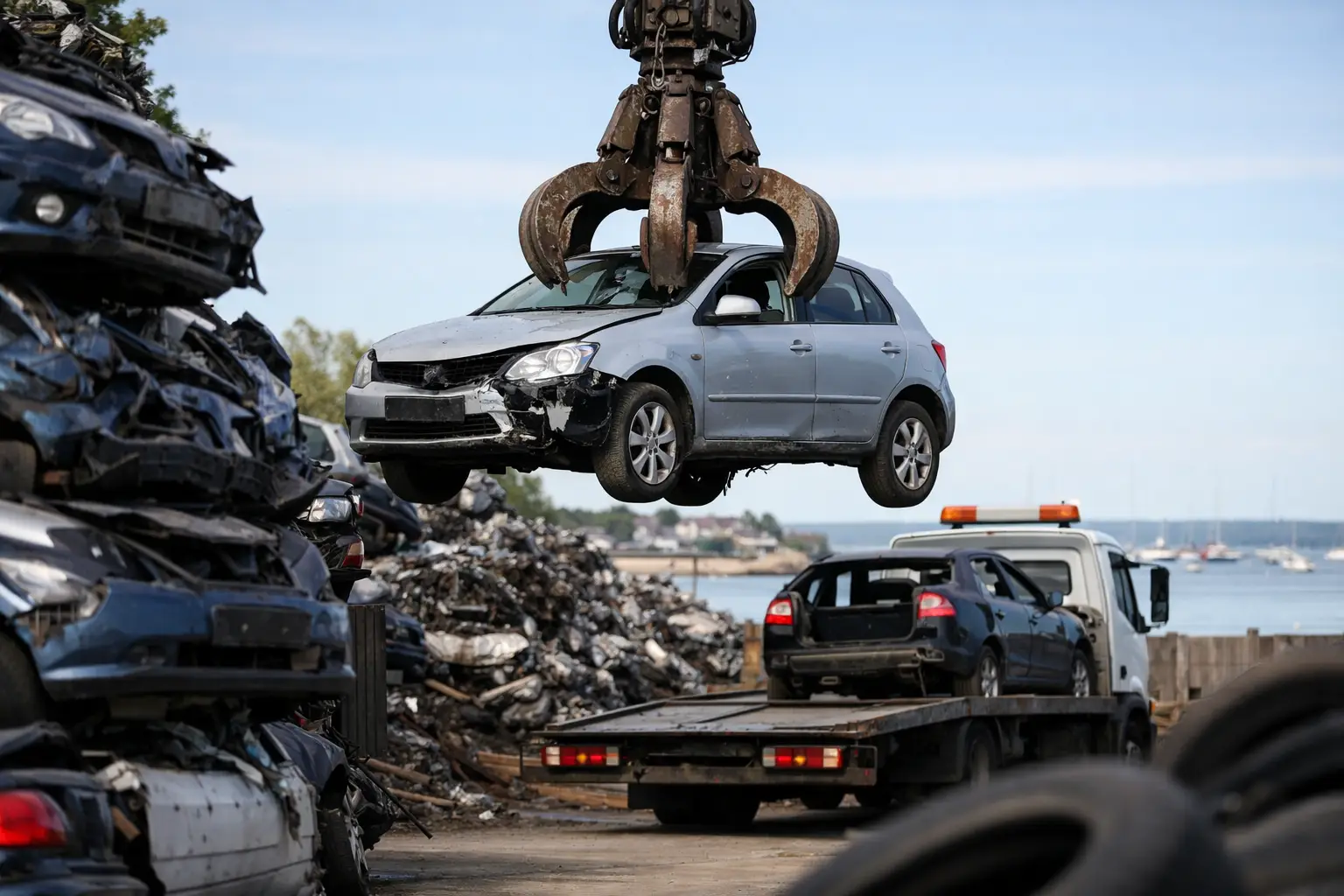
A failed MOT, accident damage, or a car that will not start can turn a simple driveway problem into an urgent job. For car scrapping in Leigh-on-Sea, Scrap Car Kings can be reached on 07944 495 495 for a quick quote, free collection, and a clear route to compliant disposal. Instead of arranging transport, dealing with unreliable private buyers, or wondering what happens to the vehicle afterward, you can arrange collection and move on.
The right option depends on the vehicle’s condition and whether it still has resale value. A newer car with a minor fault may be worth repairing or selling as a running vehicle. But when repair costs are higher than the car’s value, it has serious structural damage, it is a non-runner, or it has reached the end of its useful life, recycling is often the sensible choice.
Car Scrapping in Leigh-on-Sea Without the Runaround
People usually decide to dispose of a vehicle after a specific event: an MOT failure with a long repair list, an insurance write-off, a major mechanical fault, flood damage, or months of a car sitting unused. The difficulty is rarely deciding that the car has to go. It is sorting out collection, payment, and paperwork without adding another headache to an already inconvenient situation.
A professional collection service keeps those steps together. You provide the vehicle details, receive a quote, agree a collection time, and hand over the vehicle when the team arrives. Payment is arranged securely, and the vehicle is taken to a licensed operator for treatment and recycling. That is a much cleaner process than trying to advertise a non-running car, field low offers, and find someone with the means to transport it.
Free collection matters particularly when the vehicle cannot be driven. Towing can quickly reduce the value you receive, and asking a buyer to collect is not always as straightforward as it sounds. Confirm the collection address, whether the car is accessible, and if it has flat tires, missing keys, or no valid MOT. Giving accurate information upfront helps avoid delays on the day.
What Determines Your Scrap Car Quote?
There is no single fixed price for every unwanted vehicle. Quotes are based on the information available at the time, including the vehicle’s make, model, age, weight, condition, location, and current recycling market value. Larger vehicles may contain more recyclable material, but condition can still affect the offer. A complete vehicle is generally easier to process than one with significant items missing.
Be straightforward about damage. Tell the buyer if the engine does not run, the vehicle has been in a collision, it has water damage, or it is blocked in on a driveway. Honesty protects the quoted price and allows the right collection equipment to be scheduled. It also means there are no awkward surprises when the driver arrives.
Registration details are useful because they help identify the vehicle accurately. If you have the V5C registration certificate, keep it ready. If it is unavailable, do not assume the process has stopped, but explain the situation when requesting your quote. You may be asked for proof of identity and ownership before collection can proceed.
The Collection Process, Step by Step
Once you accept a quote, collection should feel organized rather than uncertain. You agree a suitable time window and make sure the vehicle can be reached safely. Remove personal belongings before the collection team arrives. Check the glove box, door pockets, trunk, under-seat storage, and any phone holders or charging compartments. It is easy to leave behind documents, keys, parking permits, or small valuables in a car you have stopped using.
At collection, the vehicle details and condition are checked against the information supplied. The collection team will load the vehicle, confirm the transfer arrangements, and provide the relevant paperwork or guidance for the next stage. Secure bank transfer is the normal payment method for scrap vehicles, giving both sides a clear record of the transaction.
A legitimate service should not leave you guessing about the vehicle’s destination. End-of-life vehicles must be handled through licensed facilities, including an Authorized Treatment Facility where required. This protects you from the risk of a vehicle being abandoned or handled outside the proper system while supporting responsible recycling of recoverable materials.
Paperwork and DVLA Responsibilities
Disposing of a car is not finished the moment it leaves your property. You must notify the DVLA that you are no longer responsible for the vehicle. This step is essential because it helps prevent future tax, penalty, or enforcement issues being connected to a car you no longer own.
The precise process can vary depending on the vehicle’s status and the paperwork you hold, but the key principle is the same: keep a record of the transfer and make the DVLA notification promptly. Do not rely on someone else to handle your personal responsibility without checking what you need to do. A reputable vehicle buyer can explain the process and provide paperwork support, but you should retain copies of all documents and payment confirmation for your records.
If the vehicle has a private registration plate, deal with that before collection if you want to keep it. A personalized plate is not automatically protected simply because the vehicle is being disposed of. Apply to retain or transfer it through the proper DVLA process before the car is collected.
When Scrapping Is Better Than Selling Privately
Private sale can make sense for a car that is roadworthy, desirable, and realistically priced. It may also bring more money than recycling, especially if the vehicle needs only a modest repair. The trade-off is time. You will need to create an ad, respond to messages, arrange viewings, negotiate, and manage the risk of buyers failing to show up.
For a car with major damage, a serious engine or gearbox issue, no MOT, or no ability to move under its own power, the private-sale route can become more trouble than it is worth. Buyers may expect a steep discount, collection may fall through, and the car can remain on your property for weeks. A direct collection service is designed for owners who value certainty, speed, and proper disposal more than a long selling process.
The same applies to unwanted vans and fleet vehicles. If several vehicles need to be removed, clear scheduling and paperwork become even more valuable. Provide the details for each vehicle separately so the collection plan and quotes reflect the actual situation.
Questions to Ask Before You Agree
Before accepting an offer, make sure you understand whether collection is genuinely free, when payment will be made, and what documents you will receive. Ask whether the quote is based on the exact condition you described and whether there are any circumstances that could change it. A clear answer is a good sign of a professional operation.
You should also confirm that the vehicle will be handled through licensed channels and ask what support is available for the DVLA notification. A low price is not a bargain if it creates uncertainty about your legal responsibilities afterward. Fair valuation, reliable collection, and correct paperwork are all part of the value of the service.
If your car is taking up space, cannot be driven, or is becoming more expensive to keep than it is worth, do not let it become a lingering problem. Have the vehicle details ready, be clear about its condition, and choose a collection service that gives you a confirmed plan rather than another promise to chase.


