A failed MOT, accident damage, or a car that will not start can turn from an inconvenience into a problem sitting on your driveway. With car scrapping Southend – Scrap Car Kings, you can turn an unwanted vehicle into a straightforward sale, with a quote, collection, payment, and compliant disposal handled in one clear process.
The right service should not leave you arranging a tow, chasing payment, or wondering what happens to the vehicle after it is collected. Whether your car is at home, at a garage, or parked at a workplace, the priority is to remove it legally, promptly, and for a fair price.
When scrapping your car is the sensible choice
Not every older car needs to be scrapped. If it is safe, reliable, and economically worthwhile to repair, selling it privately may produce a higher return. But private sales take time, require viewings, and can be difficult when a vehicle has major faults, warning lights, accident damage, or no current MOT.
Scrapping is often the practical choice when repair costs outweigh the vehicle’s value. Common examples include non-runners, flood-damaged cars, insurance write-offs, cars with severe corrosion, and vehicles that have failed an MOT with a long list of expensive work.
It can also make sense when you simply need the vehicle gone quickly. A car left unused can take up valuable space, lose further value, and create problems if its tax, insurance, or registration status is not kept in order. A professional collection service removes that uncertainty without putting the burden on you to transport the vehicle.
What affects a scrap car quote in Southend?
A quote is not based on one number alone. Vehicle weight and current metal values matter, but so do the make, model, age, condition, location, and ease of collection. A complete vehicle may be valued differently from one with substantial damage or missing items. Catalytic converter type can also affect the price on some vehicles.
Accurate details help produce a more reliable quote. Be ready to provide the registration number, vehicle make and model, approximate condition, and whether it starts and rolls. It is also useful to say where it is located and whether there are access restrictions, such as a tight residential road, underground parking, or a flat tire.
Be honest about serious damage. A clear description protects you from a changed price at collection and lets the collector arrive with suitable equipment. A fair service should explain what has been allowed for in the quote rather than relying on vague promises that change once someone is at your door.
Non-running and damaged vehicles can still be collected
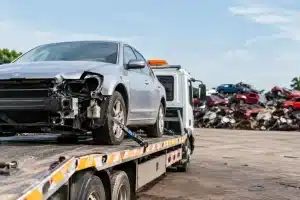
A vehicle does not need to be roadworthy to be collected. Cars with engine trouble, electrical faults, accident damage, flat tires, or no MOT can usually be removed using the appropriate recovery equipment. Tell the collection team about the condition in advance so the booking can be planned correctly.
This is particularly useful after a breakdown or an insurer has declared a vehicle beyond economic repair. Instead of paying separately for recovery and then trying to find a buyer, you can arrange one collection and receive payment once the sale is completed.
How the collection process works
The process should be simple from the first contact. Start by requesting a quote and providing accurate vehicle details. Once you are happy with the offer, agree on a collection time that works for you. Same-day collection may be possible depending on availability, but it is better to confirm a time than assume one.
On collection day, make sure the vehicle is accessible and remove your personal belongings. Check the glove box, door pockets, trunk, under-seat storage, and any phone holders or charging compartments. Remove parking permits, toll tags, documents you need to keep, and any personal data stored in the vehicle’s infotainment system.
The collector will check the vehicle matches the agreed description and complete the required handover process. Payment should be made by secure bank transfer, providing a clear record of the transaction. Keep confirmation of the payment and any collection documentation for your records.
Free collection is a major advantage when the vehicle cannot be driven. It avoids the cost and inconvenience of arranging your own transport, while giving you a scheduled removal rather than waiting around for an uncertain buyer.
Documentation and legal responsibilities
Selling an end-of-life vehicle involves more than handing over the keys. You need to know who is taking the vehicle and that it will be handled through the correct licensed channels. A reputable vehicle recycling service works with licensed operators and Authorised Treatment Facilities, helping ensure the vehicle is processed responsibly.
You should also deal with the DVLA notification promptly. In most cases, the registered keeper must notify the DVLA that the vehicle has been sold or transferred. Do not assume this happens automatically just because the vehicle has been collected. Confirm what information is required, complete the notification as instructed, and retain any confirmation.
The V5C registration document is useful, but a missing document does not always prevent collection. The requirements can depend on the circumstances, so explain this when requesting your quote. You may be asked for proof of identity and proof that you are entitled to sell the vehicle.
Why compliant disposal matters
Choosing a licensed route is about protecting yourself as much as protecting the environment. An improperly handled vehicle can create unnecessary risk if its ownership trail is unclear or it is not processed correctly. Proper treatment allows fluids, batteries, tires, and other materials to be managed responsibly, while recoverable materials can be recycled.
A lower offer from an unknown buyer is not always a better deal if there is no clear paperwork, no reliable payment process, or no confidence that the vehicle will be disposed of correctly. Convenience is valuable, but compliance and traceability are essential.
Preparing your car before collection
You do not need to spend money repairing a car before it is collected for scrap. In fact, repairs rarely make financial sense if the vehicle has already reached the end of its useful life. A few simple preparations are enough.
First, remove all personal items and documents you want to retain. Next, take photographs of the vehicle’s condition and registration plate for your records. If the vehicle has a private plate, deal with the retention process before collection, as you may lose the right to keep it after the vehicle is transferred.
Have your keys ready, including any locking wheel nut key if the vehicle has one. If you have service records, they are not normally required for a scrap sale, but they may help you answer questions about the vehicle. Finally, make sure the collector can safely access the car. Let them know in advance if it is blocked in, cannot roll, or is on private land with entry restrictions.
Choosing a service you can trust
The fastest quote is only useful when the rest of the service is dependable. Look for clear communication, a realistic collection window, transparent valuation, secure payment, and support with the paperwork. You should not feel pressured to accept an offer before you understand the process.
Scrap Car Kings is built around that practical approach: quick quotations, free collection, bank transfer payment, and licensed disposal for unwanted vehicles across Southend and the surrounding area. The aim is to make a difficult vehicle situation easier, not add another task to your list.
If your car is no longer worth repairing, do not let it become a longer-running problem. Gather the key details, ask for a clear quote, and choose a collection service that gives you a fair price and a proper record of the handover.