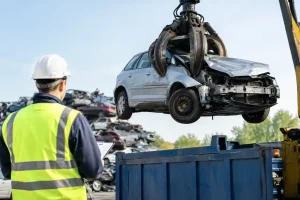
A car that will not start on the driveway can become expensive surprisingly quickly. It may be blocking space, losing value, or creating pressure to arrange transport before its tax, insurance, or MOT situation becomes another problem. This guide to vehicle disposal explains how to turn an unwanted vehicle into a straightforward, legal transaction, without chasing private buyers or arranging your own towing.
For most owners, the best route is to get a clear quote, have the vehicle collected free of charge, receive payment securely, and make sure the paperwork is handled correctly. The details matter, particularly when your vehicle is a non-runner, an insurance write-off, flood-damaged, or simply no longer worth repairing.
When vehicle disposal is the sensible choice
Disposal is not only for vehicles that have reached the end of their working life. It can be the practical decision whenever the cost, effort, and uncertainty of keeping or selling a vehicle outweigh its remaining value.
An MOT failure is a common example. One failure does not automatically mean a vehicle should be disposed of, but a long repair list can change the calculation. If the work involves major mechanical issues, structural corrosion, or repeated faults, it is worth comparing the repair bill with what the vehicle would realistically be worth afterward.
The same applies to non-runners. A car with a flat battery may be an easy fix. A vehicle with engine damage, a failed transmission, electrical faults, or a long period off the road is different. Private buyers often expect a steep discount and may still require you to deal with collection. A professional buyer can assess the vehicle as it stands and arrange transport.
Insurance write-offs also need a clear plan. Depending on the category and condition, some vehicles may be suitable for repair, while others should be processed through a licensed treatment facility. If you are unsure, be honest about the damage when requesting a quote. Accurate information protects you from last-minute changes and helps arrange the right type of collection.
Your guide to vehicle disposal, step by step
A reliable disposal process should be simple from the first quote to the final confirmation. You should know what the vehicle is worth, when it will be collected, how you will be paid, and what happens to the registration record.
1. Gather the vehicle details
Start with the registration number, make, model, age, fuel type, and overall condition. Note whether it starts and drives, has accident or flood damage, has failed its MOT, or has missing keys or documents. These details allow a buyer to give a more realistic valuation.
Be specific rather than optimistic. A transparent description usually leads to a smoother collection and a quote that holds up. If the vehicle is parked in a tight space, has flat tires, or cannot be moved, mention that too. A suitable recovery vehicle can then be arranged from the outset.
2. Request and check the quote
A quote should be clear about the amount offered and whether collection is included. Do not assume that a high headline price is the final payment if the provider has not confirmed the vehicle condition, collection location, and accessibility.
Ask whether there are any call-out fees, deductions for non-runners, or charges connected to paperwork. A professional service should explain the valuation in plain language. Vehicle value can depend on weight, current material prices, location, condition, and whether it can be moved under its own power. Prices change, so a quote may have a time limit, but the terms should never be vague.
3. Choose a collection time that works
Free collection removes the biggest practical hurdle for most owners. You should not need to organize a separate tow truck or take time off for an all-day appointment. A good provider will agree a collection window, confirm what the driver needs, and tell you what to have ready.
Keep the vehicle accessible and remove personal belongings before collection. Check the glove box, door pockets, trunk, under-seat storage, and any phone holders or charging compartments. It is easy to leave behind documents, parking permits, sunglasses, or personal data stored in an infotainment system.
If possible, remove saved addresses, call histories, and connected accounts from the vehicle’s display. This is especially worthwhile on newer cars, where apps and navigation systems can contain more information than people realize.
4. Complete the paperwork properly
Paperwork is the part of vehicle disposal that should never be treated as an afterthought. In the UK, the registered keeper remains responsible for the vehicle until the DVLA record is updated. Make sure the transfer or disposal is reported correctly and keep evidence of the transaction.
A licensed operator should provide the appropriate documentation, including a Certificate of Destruction when it applies. This is formal proof that an end-of-life vehicle has been processed through an authorized route. Not every vehicle transaction is identical, especially where an insurer is involved, so ask what documentation you will receive and when.
Your V5C registration document is helpful, but do not panic if it is missing. You can still dispose of a vehicle in many cases, provided you can prove you are the registered keeper and supply the information required. Tell the buyer early so they can confirm the correct process.
5. Receive payment before the vehicle leaves
Payment should be secure, traceable, and agreed in advance. Bank transfer is the standard choice because it creates a clear record and avoids the risks of handling large amounts of cash. Confirm that the funds have arrived in your account before the vehicle is taken away.
Have your identification and any requested ownership documents ready at collection. The process should be professional, not rushed or unclear. If the amount offered suddenly changes without a valid reason that was not discussed beforehand, you are entitled to ask why and decide whether to proceed.
Why licensed disposal protects you
Choosing licensed disposal is about more than clearing a vehicle from your property. End-of-life vehicles contain fluids, batteries, tires, and other materials that require controlled handling. Authorized Treatment Facilities are equipped to depollute and process vehicles in line with environmental rules.
That route also gives you a stronger paper trail. If a vehicle is passed on informally and later abandoned or handled improperly, the registered keeper may face difficult questions. Proper documentation, a verified buyer, and prompt DVLA notification reduce that risk.
For London and Essex vehicle owners, collection is particularly useful when a car is not roadworthy. Driving an uninsured, untaxed, or unsafe vehicle to dispose of it can create unnecessary trouble. Collection from your home, workplace, repair shop, or roadside location is often the safer and easier option.
Common mistakes to avoid
The biggest mistake is accepting a quote without confirming what it includes. A collection that sounds free should remain free when the driver arrives, provided the vehicle description was accurate. Get the key details confirmed before booking.
Another common problem is handing over the vehicle without keeping records. Save the quote, payment confirmation, collection details, and any destruction or transfer documents. These take moments to store and can be valuable if you need to prove when responsibility ended.
Finally, do not leave the vehicle sitting for months because you are waiting for the perfect outcome. Older vehicles can deteriorate, attract complaints, and become harder to collect. If repair no longer makes financial sense, a quick, compliant sale can be the better result.
What to expect from a professional buyer
A reputable vehicle-buying service should make the process feel organized from the first call. You should receive a clear valuation, a realistic collection time, free pickup where agreed, secure payment, and help with the required disposal steps. There should be no pressure to guess, transport the vehicle yourself, or navigate official forms alone.
Scrap Car Kings works with owners of unwanted, damaged, and non-running vehicles across London, Essex, and surrounding areas, with quotes and collection arranged around the condition of the vehicle. The goal is not to make disposal complicated. It is to remove the vehicle legally, pay you fairly, and leave you with the records you need.
If your vehicle has become one more task you keep putting off, start with its registration and an honest description of its condition. A clear quote and confirmed collection can turn a stalled problem into a completed job in far less time than you might expect.