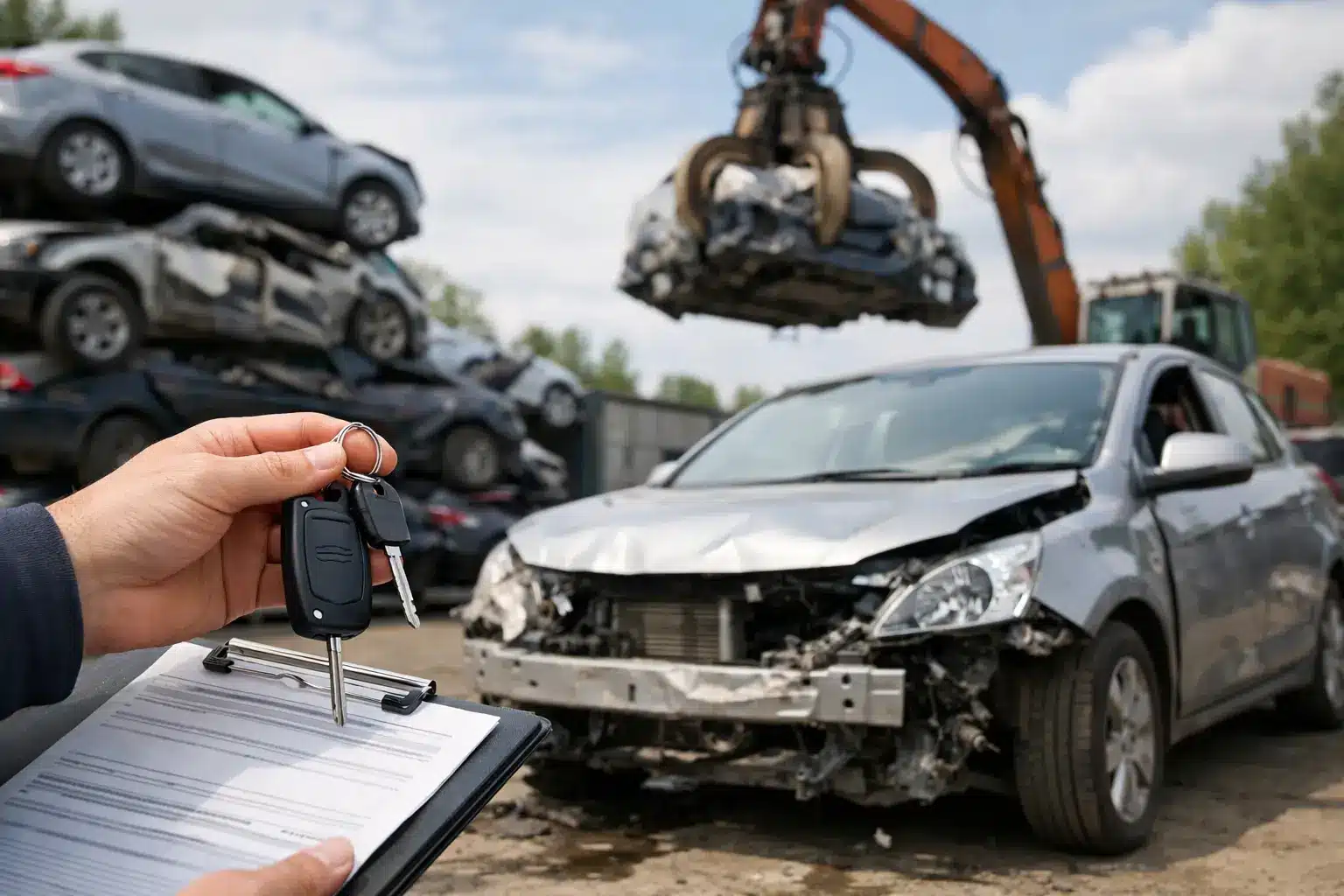
A car that has failed its MOT, suffered accident damage, or simply will not start can become an expensive problem quickly. Knowing how to scrap a car legally protects you from fines, future tax issues, and the risk of your vehicle being abandoned or used improperly after it leaves your driveway.
The process is straightforward when you use a licensed operator, keep the right records, and notify the DVLA correctly. Whether you are clearing an old non-runner in London, dealing with an insurance write-off in Essex, or disposing of an unwanted van, these are the steps that matter.
1. Decide whether scrapping is the right option
Scrapping is usually the sensible route when repair costs outweigh the vehicle’s value. Common examples include severe MOT failures, engine or gearbox problems, extensive rust, flood damage, accident damage, and vehicles that have been parked off the road for too long.
Before arranging collection, check whether the vehicle has any realistic resale value. A newer car with limited damage may be worth selling as a repair project, while a vehicle with major structural faults or a failed engine is often better sent for compliant recycling. The condition, weight, make, model, catalytic converter, and current metal market all affect the amount you may be offered.
If the vehicle is unsafe or uninsured, do not drive it to be disposed of. Arrange free collection instead. This avoids unnecessary risk and ensures the vehicle is transported properly.
2. Use an Authorized Treatment Facility
The most important legal requirement is to use an Authorized Treatment Facility, often called an ATF. These are licensed sites permitted to depollute and recycle end-of-life vehicles in line with environmental regulations.
A legitimate vehicle buyer should be able to explain how your car will be processed, confirm that disposal is compliant, and provide the necessary documentation. Do not hand your vehicle to an unknown collector who cannot show that they work with a licensed facility. If the car is later abandoned, improperly disposed of, or connected to another offense, the registered keeper may face difficult questions.
A professional collection service removes the hassle from this stage. Scrap Car Kings arranges collection and compliant disposal through licensed operators, so you do not need to organize transport for a non-running or damaged vehicle yourself.
3. Get a clear quote before collection
Ask for a quote that reflects the actual condition of your vehicle. Be honest about accident damage, missing wheels, fire damage, whether it starts, and whether it is complete. A correct description helps avoid a changed offer when the collector arrives.
A reliable quote process should also make clear whether collection is included and how payment will be made. For most private owners, a fixed price with free collection is preferable to arranging separate towing or negotiating with multiple buyers.
Remember that payment for a scrap vehicle cannot legally be made in cash under UK scrap metal rules. Payment should be made by a traceable method, such as a bank transfer. This protects both parties by creating a clear transaction record.
4. Remove personal items and prepare your documents
Before the vehicle is collected, give it one careful final check. Look under the seats, in the glove compartment, door pockets, trunk, center console, and any storage compartments. Remove documents with personal information, parking permits, toll tags, CDs, tools, and anything else you want to keep.
You will usually need photo identification and proof of address. Have your vehicle registration certificate, known as the V5C log book, ready if you have it. The V5C helps establish that you are the registered keeper and allows the disposal to be recorded correctly.
Do not worry if you cannot find the V5C. You can still dispose of a vehicle legally, but tell the buyer before collection. You will need to make sure the DVLA is notified directly, and the operator may request additional identification to confirm ownership.
It is also sensible to take a few photographs of the car before it leaves, including its registration plate and general condition. This is not a replacement for official paperwork, but it gives you an additional record of the handover.
5. Complete the vehicle handover properly
When the collector arrives, confirm the vehicle registration number, agreed price, and payment method before handing over the keys. Check that the company collecting the car matches the business you booked with, especially if collection is being carried out by a transport partner.
You should receive a receipt or written confirmation that identifies the vehicle, the date of collection, and the business taking possession. Keep this with your payment confirmation and any DVLA correspondence. Good records are useful if there is ever a query about the vehicle after collection.
For a vehicle that is being destroyed, an ATF may issue a Certificate of Destruction. This is formal proof that the vehicle has been accepted for destruction and will not return to the road. Not every transaction will be processed in exactly the same way, particularly if a vehicle is being assessed before final treatment, so ask what documentation you will receive and when.
6. Notify the DVLA without delay
Handing over the car does not automatically remove your responsibility as the registered keeper. You must notify the DVLA that you have transferred the vehicle to the relevant business or authorized facility.
The fastest option is normally to update the DVLA online using the details from the V5C. If you use the paper process, complete the appropriate section of the log book and send it to the DVLA. Keep a note of the date you submitted the notification.
This step matters because it updates the registered keeper record. Once the DVLA has processed the change, you should no longer be responsible for vehicle tax, parking penalties, enforcement notices, or other issues that arise after the handover date.
If there is remaining vehicle tax, the DVLA generally calculates any refund due after it receives the notification. You do not need to wait for a tax refund before arranging collection.
7. Cancel insurance and keep your records
After the DVLA notification has been submitted and the car has been collected, contact your insurer. Tell them the vehicle has been disposed of and ask to cancel the policy or transfer it to another vehicle if appropriate. Leaving insurance active can mean paying for cover you no longer need.
Keep your collection receipt, bank transfer confirmation, Certificate of Destruction if issued, and DVLA acknowledgment in a safe place. Retaining these records for several years is a sensible precaution, particularly if the vehicle had outstanding finance history, accident damage, or a complicated ownership record.
Common mistakes to avoid when scrapping a car legally
The biggest mistake is choosing a collector purely because they offer the highest price without checking how the vehicle will be handled. A slightly higher offer is not worth the risk of incomplete paperwork, unclear payment terms, or illegal disposal.
Another common error is assuming the collector will notify the DVLA for you. Some professional services provide guidance and handle key parts of the process, but you should always confirm that the registered keeper record has been updated. Until then, do not assume your legal responsibility has ended.
Finally, never accept cash for the vehicle. Traceable payment is not only a legal requirement in this situation, it also gives you proof that the sale took place.
A legal disposal should feel simple
You do not need to repair a failed vehicle, find a private buyer, or pay to transport a non-runner just to get it off your hands. With a licensed operator, a clear quote, free collection, secure bank payment, and prompt DVLA notification, the process can be completed with very little disruption.
Take a few minutes to verify the company, prepare your documents, and retain your proof of disposal. Those small steps turn an unwanted car into a properly closed transaction, with your legal responsibilities clearly behind you.