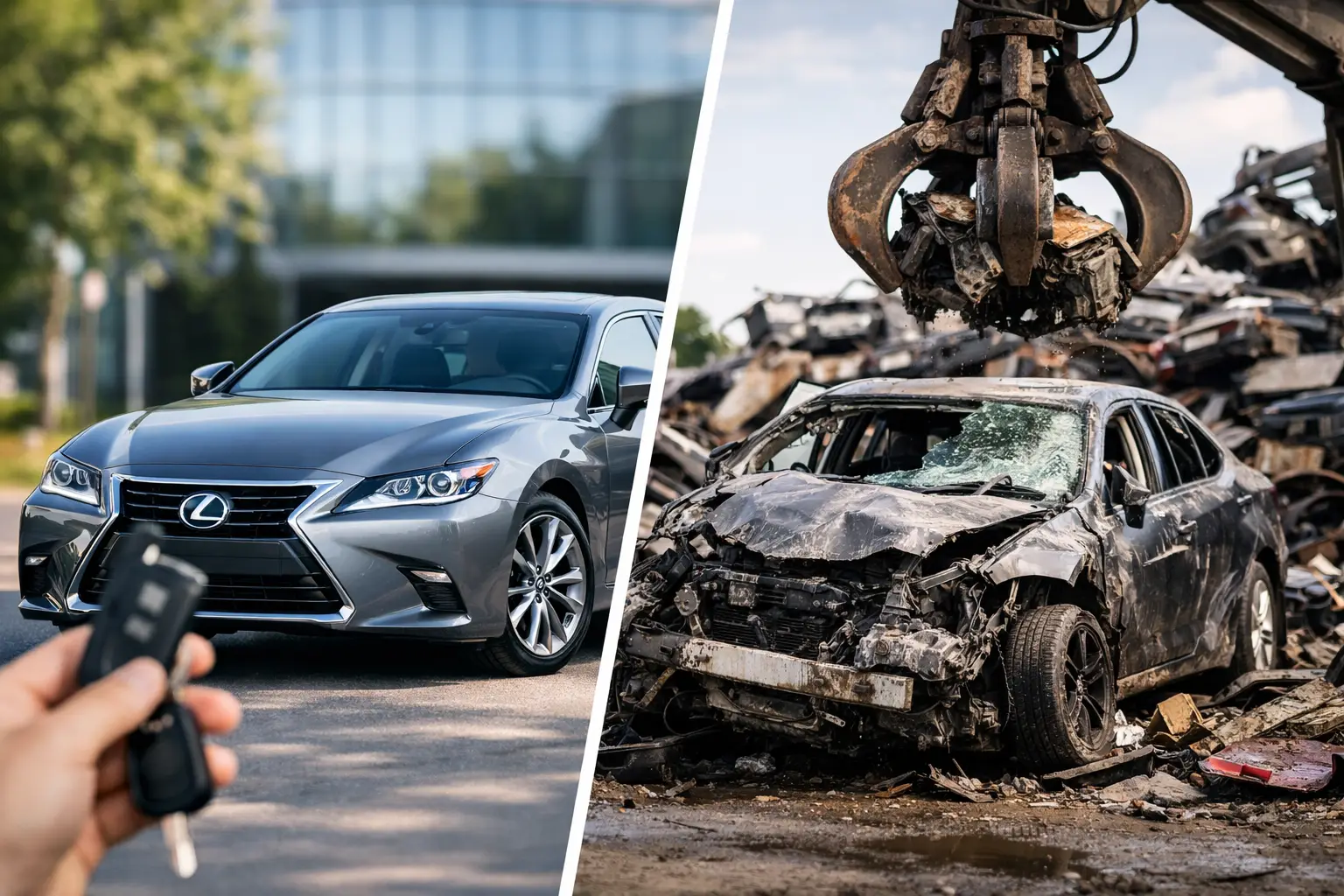
A Lexus that still looks sharp on the driveway can be far less valuable than people expect once repair bills, warning lights, and towing costs enter the picture. If you are asking whether to sell or scrap my Lexus-scrapcarkings.com, the real question is simpler: will a private sale give you more money after the hassle, or is a fast, compliant vehicle pickup the better move?
Sell or scrap my Lexus-scrapcarkings.com: start with the condition
The biggest factor is not the badge on the hood. It is the actual condition of the vehicle. A Lexus with high mileage, engine trouble, transmission issues, accident damage, flood damage, or a failed inspection can be difficult to sell privately at a price that makes the effort worthwhile.
On paper, many Lexus models hold value well. In practice, buyers become cautious the moment a luxury vehicle needs expensive work. A non-running RX, an IS with electrical faults, or an older ES with suspension and dashboard warning issues may still attract interest, but usually from buyers looking for a steep discount. That means long messages, missed appointments, and price haggling from people who know the repairs are costly.
If your Lexus starts, drives, has a clean history, and needs only minor cosmetic work, selling it may make sense. If it is sitting unused, failed inspection, was declared a total loss by insurance, or costs more to fix than it is worth, scrapping it is often the cleaner decision.
When selling your Lexus makes sense
A private sale works best when the car is still usable and marketable. That usually means it runs reliably, has no major mechanical faults, has service history, and does not need immediate expensive repairs. Lexus buyers tend to care about maintenance records, smooth performance, and whether the car has been looked after properly.
If you have a newer model, modest mileage, and only light cosmetic wear, you may get more by selling than by sending it for recycling. The same can apply to a well-kept hybrid with a healthy battery and no warning lights. In those cases, buyers are paying for a functioning vehicle, not just end-of-life value.
The trade-off is time. Private selling often means cleaning the vehicle, taking photos, writing a listing, answering messages, proving the title is clear, and arranging viewings. It also means dealing with people who arrive late, offer less than agreed, or disappear after asking a dozen questions.
That process is fine if you want to maximize every last dollar and the car is in good enough shape to support that goal. It is less appealing when the vehicle is dead on the driveway and costing you space, stress, or storage fees.
When scrapping your Lexus is the smarter option
A lot of Lexus owners wait too long because they assume the brand name guarantees resale value. It does not, especially once major repairs are involved. Luxury vehicles can become expensive liabilities very quickly.
Scrapping is often the better route if your Lexus is not running, was damaged in a collision, has serious rust, failed emissions or inspection, suffered flood damage, or has been parked for months because the repair estimate makes no financial sense. The same applies if the vehicle is complete but no longer practical to put back on the road.
This is where a professional buyer matters. A proper service gives you a quote, collects the vehicle for free, pays by secure bank transfer, and handles the disposal through licensed operators and authorized treatment facilities. That removes the biggest headaches for owners who just want the vehicle gone legally and quickly.
For many people, that convenience is worth more than trying to squeeze out a little extra from a difficult private sale.
What affects your Lexus value either way
Whether you sell or scrap, valuation depends on a few practical factors. Model, age, mileage, and overall condition all matter. So does whether the vehicle is complete, whether it starts, and whether it can be collected easily.
A newer Lexus SUV will usually command more than an older sedan at end of life, but condition still leads the conversation. Missing paperwork can slow things down. So can severe accident damage or inaccessible parking. If your Lexus is stuck in a basement garage, has flat tires, or cannot roll, say that upfront when requesting a quote. Clear details usually lead to a more accurate number and fewer surprises on collection day.
Catalytic converter type, vehicle weight, and current recycling market conditions can also influence pricing. That is why one owner’s quote may differ from another’s even if both have the same model.
Why owners in London and Essex often choose speed over listing it
In busy areas, convenience counts. A broken Lexus parked on a street, at an apartment building, or outside a home with limited space becomes a problem fast. Add towing arrangements, time off work, and buyer no-shows, and the attraction of a direct collection service becomes obvious.
That is why many owners choose a service like Scrap Car Kings when the vehicle is no longer worth advertising. You get a fast quote, free pickup, payment by bank transfer, and support with the paperwork. For someone dealing with an MOT failure, an insurance write-off, or a car that simply will not start, that is a practical solution rather than a compromise.
It is not always about getting the absolute highest theoretical price. It is about getting fair value without losing half a week to chasing it.
Sell or scrap my Lexus-scrapcarkings.com: the decision test
If you are still unsure, use a simple test. Ask yourself what a buyer would need to spend after purchase to make the car dependable. If the answer is a large repair bill, your private sale price will drop hard. Buyers factor in risk immediately, especially with premium brands.
Then ask how quickly you need the vehicle gone. If there is no rush and the car presents well, selling may be worth trying. If you need it removed this week, do not want strangers visiting your home, or do not want arguments over condition, scrapping is usually the easier route.
Finally, think about compliance. A legitimate vehicle disposal service should handle the process properly and help ensure the right notifications are made after collection. That matters because the last thing you want is an old vehicle still appearing to be your responsibility.
Documents and details to have ready
Before you move forward, gather the registration document if you have it, your ID, the vehicle registration number, and a clear description of the condition. Mention missing keys if applicable. If the car was in an accident or has mechanical faults, be direct about that too.
Accurate information speeds everything up. It also helps avoid a changed offer at the point of collection.
Common Lexus situations where scrapping is often best
Some patterns come up again and again. Older Lexus models with transmission failure, severe warning light issues, overheating, hybrid battery problems, or heavy body damage often cost too much to repair relative to their market value. Even when the cabin is clean and the exterior still looks respectable, the numbers may not stack up.
Owners in that position are usually not looking for a long selling process. They want certainty. They want to know when the vehicle will be collected, how they will be paid, and whether the disposal is being handled the right way.
That is exactly where a direct purchase and collection service makes life easier.
The best choice depends on what your time is worth
There is no universal answer because every Lexus is different. A clean, running model with life left in it should usually be sold. A damaged, non-running, or end-of-life Lexus is often better scrapped before it drains more time and money.
The mistake is assuming you only have one option. Get a realistic view of the car’s condition, compare the likely private sale price against a direct collection quote, and be honest about how much effort you want to invest. If the gap is small, the faster route is often the smarter one.
A Lexus may have served you well for years, but once it stops being practical, the right next step is the one that gives you a fair return without creating another problem to solve.