A failed MOT can turn a usable-looking car into a problem overnight. It may be parked on your drive, unable to be legally driven, and too expensive to repair. If you are searching for “where can i scrap a car without mot – scrapcarkings – 07944 495 495,” the straightforward answer is that you can sell it for recycling without a current MOT – provided the collection and paperwork are handled properly.
An MOT certificate is not required to dispose of an end-of-life, damaged, non-running, or unwanted vehicle. What matters is using a legitimate vehicle buyer and licensed recycling route, arranging collection rather than driving an unroadworthy car, and keeping the right records once it has gone.
Can You Scrap a Car Without an MOT?
Yes. A car does not need a valid MOT to be collected and recycled. In fact, many vehicles are sold for recycling because they have failed an MOT on faults that make repair uneconomical. Corrosion, emissions problems, major engine faults, brake issues, suspension damage, and electrical failures can quickly cost more than an older vehicle is worth.
The key distinction is between selling the car and driving it. A car with no MOT generally cannot be driven or parked on a public road unless a specific legal exception applies, such as traveling to a pre-booked MOT test. If the vehicle has failed on dangerous defects, is uninsured, or is not roadworthy, moving it yourself is a risk you do not need to take.
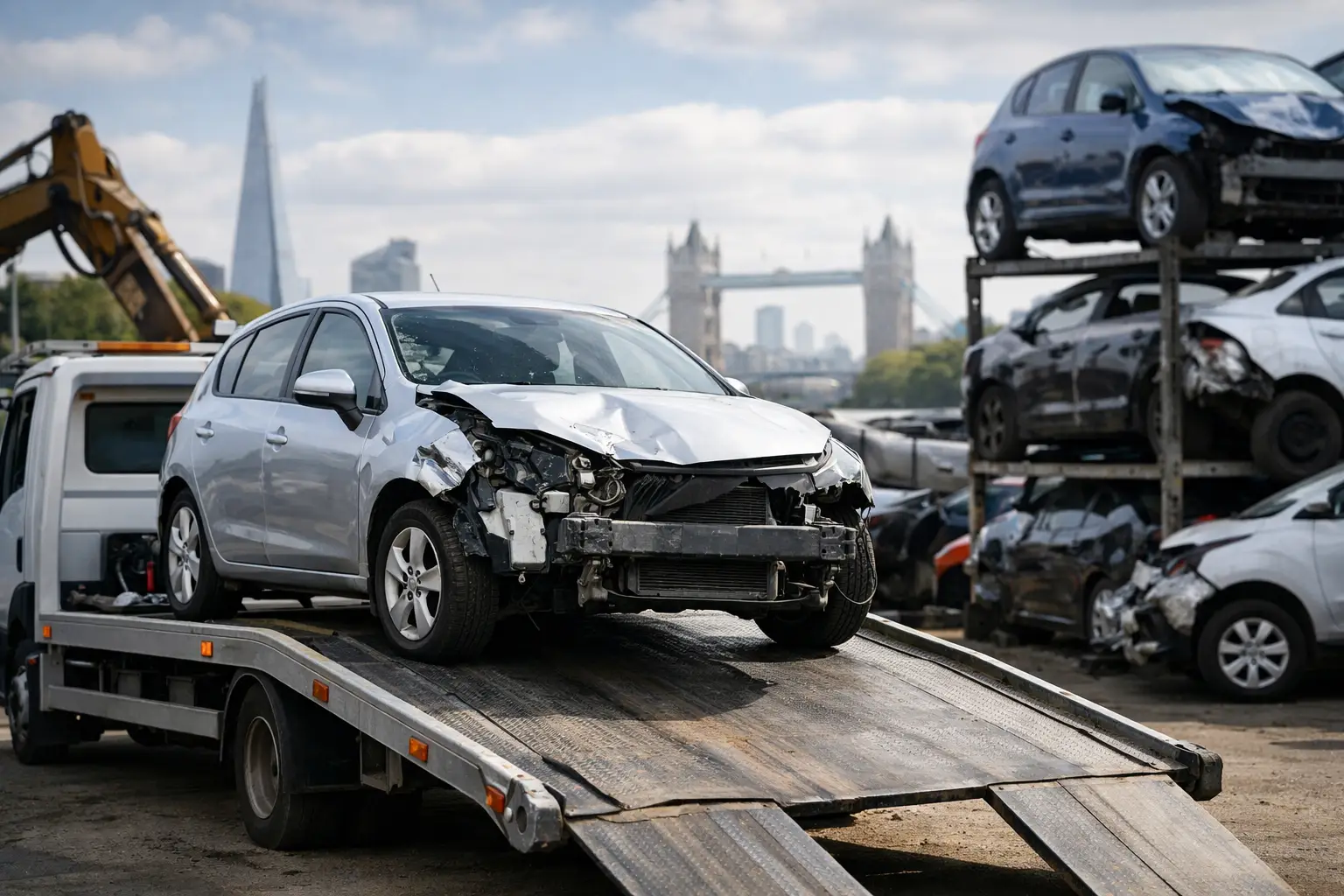
A professional collection service removes that issue. Your vehicle can be collected from your home, workplace, garage, or another accessible private location, then transported for compliant processing. You do not need to arrange a tow truck or try to get a failed vehicle back on the road first.
Where Can I Scrap a Car Without MOT Collection?
For owners in London, Essex, and surrounding areas, the most convenient option is a service that gives you a quote, collects the vehicle for free, and manages compliant disposal through an Authorized Treatment Facility. This is particularly useful when the car will not start, has no MOT, has been declared off the road, or has been sitting unused for months.
The process should be clear before you agree to anything. You provide the registration, location, and a truthful description of the vehicle’s condition. The buyer confirms the offered amount and collection arrangements. At collection, you hand over the vehicle and documentation available to you, receive secure payment, and are given the information needed to update the DVLA.
Free collection is not simply a convenience. It protects you from the cost and complication of moving an untaxed, uninsured, or unroadworthy vehicle. It also means the car can be handled safely from the point it leaves your property.
What You Need Before Collection
You can usually sell a car for recycling without an MOT certificate, service history, or repair invoices. The V5C registration document is helpful, but its absence does not always prevent collection. Be upfront if you do not have it so the buyer can explain the correct process.
Have the vehicle registration number ready, along with the exact collection address and a clear description of its condition. Mention if it is a non-runner, has accident damage, has flat tires, is blocked in, or is missing keys. These details affect how the vehicle needs to be collected and help avoid delays on the day.
You should also remove personal belongings before collection. Check the glove box, door pockets, trunk, under-seat storage, phone holders, and any paperwork you want to keep. Delete saved addresses, contacts, and call history from the infotainment system where possible. If you have a personalized registration, apply to retain it before the vehicle is disposed of.
Do not worry if the car is missing its MOT paperwork. MOT status can be checked from the registration, and the certificate itself is not the document that proves you are entitled to sell the vehicle.
The DVLA Paperwork Matters More Than the MOT
A valid MOT tells you whether a vehicle met the minimum roadworthiness standard at a particular time. It does not determine whether you can dispose of it legally. The paperwork that matters after collection is the notification that you are no longer responsible for the vehicle.
When a vehicle is transferred for recycling, make sure you follow the DVLA process for notifying them that it has been sold or transferred. Keep confirmation of the notification. This record is important because it helps protect you from future tax, penalty, or enforcement correspondence connected to a vehicle you no longer own.
If the vehicle is processed as an end-of-life vehicle, an Authorized Treatment Facility can issue a Certificate of Destruction when applicable. Keep this safely with your collection and payment records. It confirms the vehicle has entered an approved disposal route rather than being left in limbo under your name.
A reputable service should explain what happens next rather than leaving you to guess. Be cautious of anyone who cannot clearly state where the vehicle is going, who asks you to leave documents blank, or who offers vague promises about “sorting the paperwork later.”
How the Value of a No-MOT Car Is Calculated
No MOT does not automatically mean no value. The offer depends on the vehicle’s weight, make, model, age, condition, location, and current recycling market. A complete car may be worth more than one with major items missing, while a newer vehicle with a single expensive fault may still have value beyond basic recycling weight.
Be honest about the condition when requesting a quote. If the engine is seized, the vehicle has fire or flood damage, the catalytic converter is missing, or access is difficult, say so at the start. Accurate information leads to an accurate price and avoids a frustrating renegotiation at collection.
There is also a practical trade-off to consider. If your car failed its MOT on a minor issue and is otherwise in good condition, repairing and selling it privately may produce a higher return. But that route takes time, may require upfront repair costs, and can involve viewings, no-shows, and buyers trying to negotiate after inspection.
If repairs are extensive, the car is a non-runner, or you simply need it gone quickly, selling it for recycling is often the cleaner decision. You exchange the possibility of a higher private-sale price for speed, collection, and certainty.
A Simple Way to Arrange Collection
Start by requesting a quote using the registration and vehicle details. Confirm whether collection is free and whether the quoted amount includes all fees. Ask how payment will be made and when it will arrive. Fast bank transfer is generally the most straightforward option because it creates a clear payment record.
Next, book a collection time that works for you. Ensure the vehicle is accessible and that the collector can safely reach it. If it is behind another car, on a narrow street, or in an underground parking area with height restrictions, mention this when booking.
At handover, check the vehicle details, complete the required transfer steps, and keep your records. Once the payment and DVLA notification are handled, you can cancel insurance if appropriate and check whether you are due any unused vehicle tax refund.
When a No-MOT Car Should Not Be Driven
A failed MOT is a clear signal to stop and assess the vehicle. If it has dangerous defects, serious brake or steering problems, damaged tires, severe corrosion, or poor visibility, do not attempt to drive it to a collection point. Even a short trip can create safety and legal consequences.
Collection is the sensible alternative. It removes the temptation to take a risk just to get rid of an unwanted car and lets you move on without arranging repairs that no longer make financial sense.
A car without an MOT does not have to become a long-term driveway problem. With a clear quote, safe collection, secure payment, and proper records, you can dispose of it responsibly and put the space to better use.