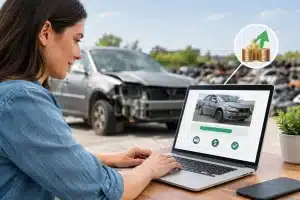
A non-running car on the driveway can become urgent quickly. Maybe it failed its MOT, has accident damage, will not start, or is simply costing money to keep. If you are asking, what paperwork do I need to scrap my car, the short answer is that the V5C log book is usually the key document. But a legal, stress-free disposal also depends on confirming your identity, using a properly licensed collector, and making sure DVLA records show that you no longer own the vehicle.
The good news is that most private owners do not need a large file of documents. With the right information ready before collection, the process can be completed quickly, with free collection and payment by bank transfer where agreed.
The main paperwork needed to scrap your car
For most vehicles in England, the most useful document is the V5C registration certificate, often called the log book. It proves that you are the registered keeper and gives the collector the vehicle details needed to process the disposal correctly.
You should also have a form of photo identification, such as a driving license or passport, available if requested. Licensed vehicle buyers need to verify who they are dealing with. A recent utility bill or bank statement may also be useful as proof of address if the address on your ID differs from the V5C.
Have your bank details ready too. Cash payments for scrap metal transactions are restricted by law, so a reputable operator will pay by bank transfer. Check that the account name and sort code are correct before the collection is confirmed.
Finally, keep any paperwork relating to your vehicle’s condition if it affects the quote. This could include an insurance write-off notice, repair estimate, or evidence that the vehicle is subject to finance. These documents are not always required for collection, but they can prevent last-minute confusion about ownership or value.
Your V5C log book: what to do with it
Do not hand over the entire V5C without first understanding how the change is being recorded. When a vehicle is being transferred to an Authorized Treatment Facility, the registered keeper normally uses the relevant section of the V5C to notify DVLA that it has been sold or transferred.
The exact V5C sections can differ depending on when the document was issued, so read the instructions printed on your version. In many cases, you can notify DVLA online, which is usually the quickest way to create a clear record. If you prefer to use the post, retain a copy or photograph of the completed section before sending it.
The important point is simple: DVLA must be told that the vehicle is no longer your responsibility. Do not assume the collector will do this automatically on your behalf unless you have agreed exactly how the notification will be handled. A professional service can guide you through the process, but the registered keeper should always make sure the update has been completed.
If you have lost your V5C, do not panic. You may still be able to sell the vehicle for disposal, provided you can prove your identity and ownership. Tell the buyer before collection, as this can affect the checks required and, in some cases, the price offered. Applying for a replacement V5C may be worthwhile if there is time, but it is not always necessary for an end-of-life vehicle.
The paperwork you should receive after collection
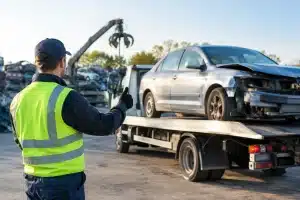
The paperwork does not stop when the vehicle is loaded onto the recovery truck. You should receive clear evidence of the transaction and keep it in a safe place.
A proper record should show the vehicle registration number, the collection date, the buyer’s business details, and the amount paid or agreed. Save the bank transfer confirmation too. This creates a straightforward trail if you ever need to prove when the vehicle left your possession.
If your car is being permanently recycled at an Authorized Treatment Facility, you should receive a Certificate of Destruction, often called a COD. This is the formal document that confirms the vehicle has been accepted for destruction and will not return to the road.
A COD is not issued in every situation. For example, if a vehicle is being transferred for repair, resale, or another legitimate purpose rather than immediate destruction, you may receive a different sales or collection record. What matters is that you understand where the vehicle is going and have written confirmation that responsibility has passed from you.
What if the car is an insurance write-off or has no MOT?
An expired MOT does not stop you from disposing of a vehicle. The car should not be driven on public roads without a valid MOT unless a legal exemption applies, but it can be collected from your home, workplace, garage, or another accessible location. You will still need the usual ownership details, especially the V5C where available.
Insurance write-offs need a little more care. If an insurer has settled the claim and taken ownership of the vehicle, you cannot sell it yourself. Check your settlement documents first. If you retained the vehicle under the terms of the claim, make sure the buyer knows its write-off category and that any outstanding finance has been cleared.
Cars with outstanding finance should never be disposed of without the lender’s permission. The finance company may have a legal interest in the vehicle, even if the V5C is in your name. Contact the lender, obtain a settlement figure, and get written confirmation before arranging collection.
What paperwork do I need to scrap my car if it is not in my name?
You cannot usually dispose of someone else’s vehicle simply because it is parked at your property. The registered keeper or legal owner needs to authorize the transaction. If you are handling matters for a relative, an estate, or a business, be ready to provide additional documents that show you have the authority to act.
For an estate, this may include a death certificate and proof that you are the executor or administrator. For a company vehicle, the buyer may need a letter of authority on company letterhead and identification for the person arranging the sale. Requirements vary, so raise the situation when requesting a quote rather than waiting until the vehicle is due to be collected.
A quick check before you book collection
Before accepting a quote, make sure the registration number, make, model, and vehicle condition are accurate. Mention missing wheels, severe accident damage, fire damage, keys that are unavailable, or difficult access. These details can affect both collection arrangements and valuation.
Remove personal belongings from the glove box, trunk, door pockets, and under the seats. Check for parking permits, documents with your address, toll tags, and garage remotes. Remove the vehicle from any parking or resident permit account where necessary.
It is also sensible to cancel insurance only after the vehicle has been collected and you have confirmation that the sale or transfer is complete. Once DVLA has updated its records, you may be due a refund for any full months of unused vehicle tax. The process is generally automatic when the change is recorded correctly.
Choose a collector who makes compliance clear
The cheapest quote is not always the best outcome if the paperwork is vague or the buyer cannot explain what happens after collection. Ask whether the vehicle will be handled through a licensed facility, how payment will be made, what proof you will receive, and whether they can help with DVLA notification.
Scrap Car Kings keeps the process practical: confirm the vehicle details, agree the price, arrange collection, verify the required documents, and provide a clear record of the transaction. For owners in London, Essex, and nearby areas, that means less time chasing paperwork and more confidence that the vehicle has been removed legally.
Put the V5C, photo ID, and bank details together before collection, then keep every confirmation you receive. A few minutes of preparation protects you from future tax, insurance, and ownership headaches – and lets you move on from a car that has already caused enough trouble.