A van that has failed its MOT, broken down for the last time, or become too expensive to keep can turn into a costly inconvenience quickly. It may be taking up space, losing value, and creating an insurance or tax headache. Knowing how to dispose of unwanted van legally gives you a clear route to payment, collection, and proper paperwork without the uncertainty of selling privately.
For many owners, the sensible option is to sell the van to a licensed vehicle recycling service that collects it, pays by bank transfer, and handles the disposal process correctly. The details matter, though. The value of the van, its condition, the paperwork available, and whether it can be driven all affect the best route.
Decide Whether the Van Is Worth Selling or Recycling
Start with an honest assessment of the van. If it is roadworthy, has a current MOT, and is in reasonable condition, a private sale or trade-in may produce more money. That route can take time, however, and buyers often expect viewings, negotiations, repairs, and proof that the vehicle is reliable.
Recycling is often the more practical choice when the van is a non-runner, severely damaged, flood-affected, accident-damaged, written off, or near the end of its usable life. It is also a good option for older work vans with major mechanical faults, high mileage, corrosion, or a failed MOT where the repair bill does not make financial sense.
A licensed buyer will usually value the van based on its weight, metal market conditions, make and model, location, completeness, and whether it has catalytic converter value. Do not assume that a non-running van has no value. Even a van that cannot be driven can still be collected and bought responsibly.
Get the Details Ready Before Requesting a Quote
A fast quote is easier to give when you have the right information ready. You will normally need the registration number, make and model, approximate condition, postcode, and whether the van starts and moves. Be upfront about missing wheels, fire damage, accident damage, missing keys, or access problems at the collection point.
You should also have your V5C registration document if possible. A missing V5C does not always prevent disposal, but it may mean additional checks are needed to confirm ownership. If the van is registered in someone else’s name, inherited, owned by a business, or subject to finance, resolve that position before arranging collection.
A fair quote should be clear about what is included. Ask whether collection is free, whether the quoted amount changes if the vehicle is not as described, and when payment will be made. A professional service will explain this before sending a driver, not after the van is loaded.
Choose a Licensed, Compliant Collection Service
The quickest way to dispose of an unwanted van is not always the safest. Avoid informal buyers who cannot show that they handle end-of-life vehicles correctly, who pressure you to hand over the van without paperwork, or who offer cash without a clear record of the transaction.
Choose a business that works with licensed operators and Authorized Treatment Facilities. This helps ensure the vehicle is depolluted and recycled in line with environmental requirements, rather than being abandoned or processed improperly. It also gives you a proper record that the van has left your responsibility.
For vans collected in London, Essex, and surrounding areas, free collection can remove one of the biggest practical barriers. You should not need to arrange a tow, pay to transport a non-runner, or take time off for an all-day appointment. Agree on a collection window, make sure the van is accessible, and tell the collector in advance if it is parked underground, blocked in, or has flat tires.
What Happens on Collection Day
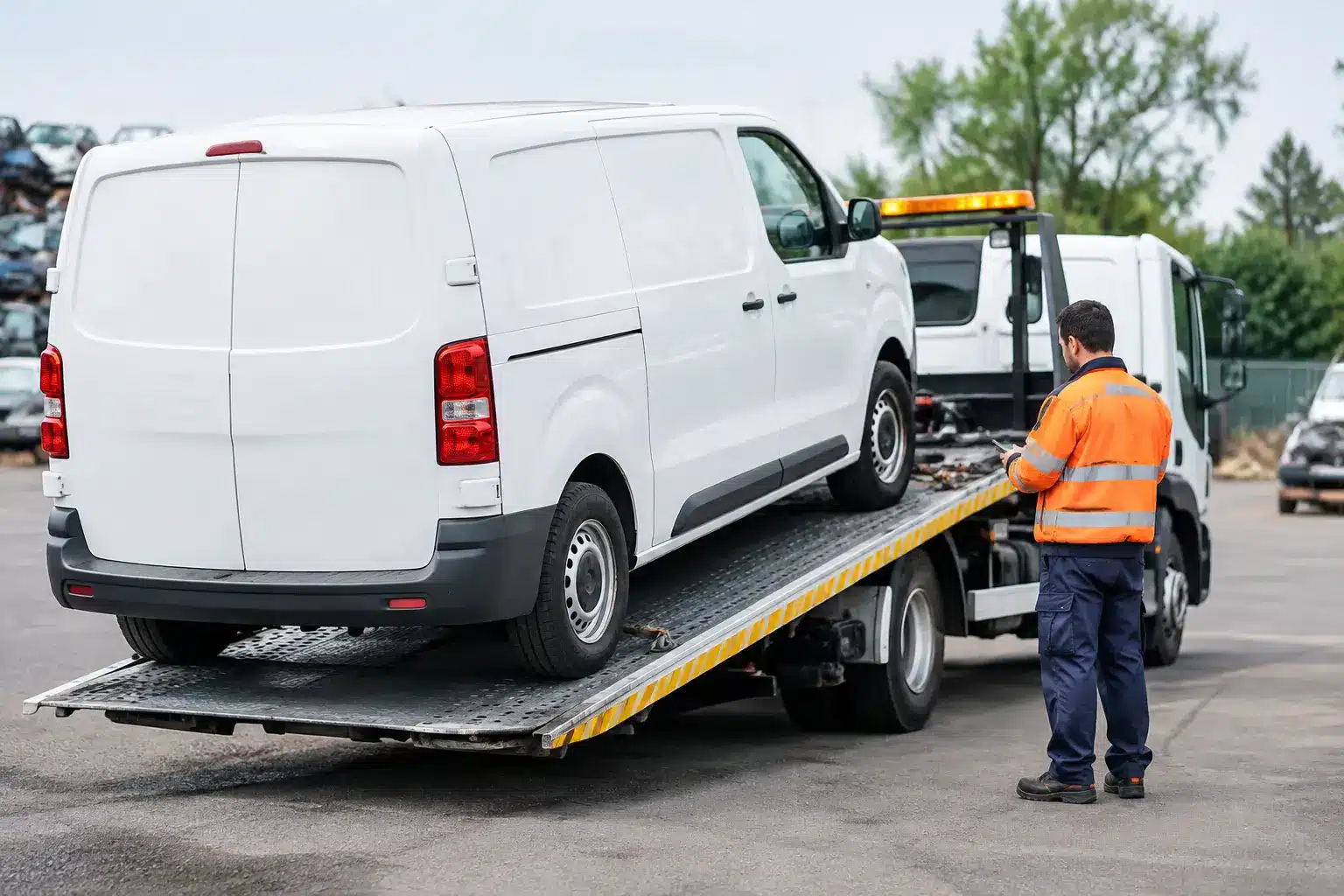
Collection day should be straightforward. The driver checks the van against the details provided, confirms the agreed price where applicable, and verifies the paperwork. If the condition matches the description, payment is usually made by secure bank transfer before or at handover, depending on the service process.
Remove all personal belongings before the driver arrives. Check the glove box, door pockets, sun visors, storage compartments, under-seat areas, and any fitted tool storage. Vans often hold business paperwork, customer details, access passes, parking permits, fuel cards, and equipment that can be easy to overlook.
You should also remove any private number plates you intend to keep before the vehicle is collected. If you have a personalized registration, retain it through the appropriate process first. Once the van has been transferred and processed, recovering that registration can be difficult or impossible.
Do not leave waste inside the vehicle. General rubbish, building materials, chemicals, paint, gas cylinders, and commercial waste can affect collection arrangements and may not be accepted. Tell the buyer about anything unusual in the van before booking so there are no surprises.
Complete the Ownership Notification Correctly
Handing over the keys is not the final step. You must notify the relevant vehicle registration authority that you have transferred the van to the buyer. In the UK, this means completing the required DVLA notification using the V5C details or the appropriate online process.
This matters because you remain associated with the vehicle until the transfer is recorded. If the van is later parked illegally, taxed, insured, or involved in enforcement action, accurate records help show when it left your ownership. Keep confirmation of the transfer, the collection details, and payment record in a safe place.
If the van is being disposed of as an end-of-life vehicle, ask for a Certificate of Destruction when one applies. This is formal evidence that the van has been passed to an Authorized Treatment Facility for compliant treatment. Not every collection results in the same documentation at the same stage, so ask the question rather than assume.
Avoid the Mistakes That Cause Delays
Most disposal problems are preventable. The first is giving an incomplete description of the van. A quote for a running vehicle with four inflated tires and easy access may not apply to a stripped, immobile van behind a locked gate. Accurate details protect both the price and the collection schedule.
The second is accepting a vague offer. If someone says they will “sort the paperwork later,” offers an unusually high figure without asking any questions, or will not explain payment, proceed carefully. Convenience should not mean giving up proof of sale or legal protection.
The third is canceling insurance or stopping responsibility too early. Keep the van insured and under your control until it has been collected and ownership transfer is confirmed. Once the process is complete, check whether you are due any refund on remaining vehicle tax and update your insurer.
A Simple Route to Fast, Legal Van Disposal
For an unwanted van, the best disposal method is usually the one that matches its real condition and leaves a clean paper trail. A roadworthy vehicle may deserve a conventional sale. A failed, damaged, or non-running van is often better handled through licensed collection and recycling, especially when towing and repairs would cost more than the van is worth.
Scrap Car Kings can provide an instant quote, free collection, secure bank transfer, and compliant disposal support for eligible vans across London, Essex, and nearby areas. The aim is simple: no drawn-out private sale, no transport hassle, and no uncertainty about what happens after collection.
Before booking, gather the van details, clear it out, and make sure you understand the ownership notification process. A properly managed collection turns an unwanted van from a lingering problem into a completed job – with payment and documentation to show for it.