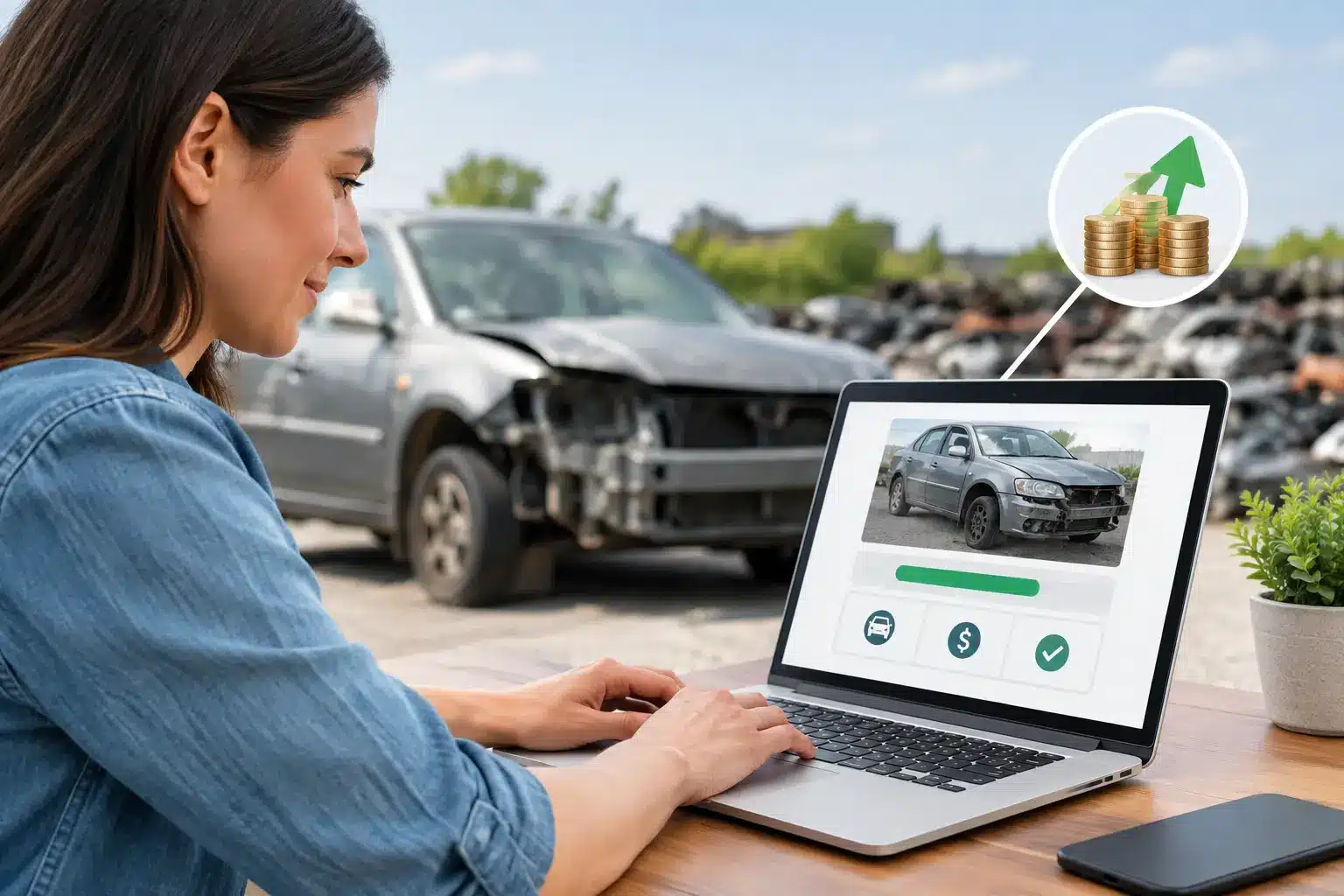
A failed MOT, a dead battery that is not the real problem, or accident damage can turn a car into an expensive driveway fixture fast. A scrap car valuation online gives you a practical starting point: what the vehicle may be worth, whether free collection is available, and what information is needed to dispose of it properly.
The useful part is not simply getting a number on screen. It is knowing that the quote reflects the vehicle you actually have and that the collection, payment, and disposal paperwork will be handled professionally. For owners in London, Essex, and nearby areas, that can mean avoiding recovery costs, unreliable private buyers, and a long list of unanswered messages.
What an online scrap car valuation is based on
An online valuation is usually calculated from details that establish the vehicle’s identity, condition, and collection requirements. The registration number helps identify the make, model, age, fuel type, and basic specification. The postal code shows where collection is needed. Your description fills in the details a registration number cannot tell anyone.
The most accurate quotes are based on honest information. State whether the car starts, rolls, has its wheels, and can be safely loaded. Mention major accident damage, fire or flood damage, missing keys, a flat tire, or parts that have already been removed. A non-running car is still eligible for collection, but it may need different equipment and more time to load safely.
The valuation can also change with current metal markets, demand for particular vehicles, vehicle weight, catalytic converter type, and the distance or access involved in collection. This is why two similar-looking cars may receive different offers, and why a quote from several months ago may not match today’s price.
Why the highest figure is not always the best offer
It is reasonable to compare quotes, especially when the vehicle still has value despite being damaged or unwanted. But a high headline figure is only useful if it is the amount you will receive after the vehicle is collected.
Before accepting an offer, confirm whether collection is genuinely free, whether the quoted price is conditional on the car being complete, and when payment will be made. Ask what happens if the vehicle cannot be moved under its own power or is parked in a tight space. Clear answers matter more than vague promises of a top price.
A reliable buyer should explain the process without pressuring you. The collection driver should arrive as arranged, check the vehicle against the information provided, and make payment by bank transfer once the agreed checks are complete. If the details are accurate, there should be no surprise reduction at the doorstep.
Details that help you get a fairer valuation
A fast quote does not mean you should rush through the questions. Taking two minutes to provide the right details can prevent a delay or a revised offer later.
Have the registration number and collection postal code ready. Then describe the vehicle’s condition in plain terms. Does it start? Is it drivable? Are all four wheels fitted? Do you have the key? Is it on a road, driveway, garage, or private parking area? These answers help the collector plan the right vehicle and loading method.
If the car has been declared an insurance write-off, has failed its MOT, or has mechanical damage, say so. Those circumstances do not stop you from obtaining a quote. They simply give a more realistic picture of the vehicle. The same applies to vans, older vehicles, flood-damaged vehicles, and cars that have been off the road for years.
Photographs can also be useful when the damage is significant. They are particularly helpful where access is difficult or the vehicle has visible collision damage. A clear photo is not about making the process harder. It helps avoid uncertainty on collection day.
How collection and payment should work
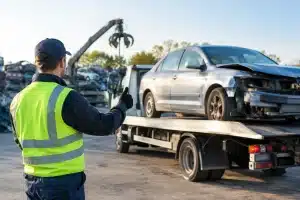
Once you accept an online quote, the next step is arranging a collection time that works for you. You should not need to insure, tax, repair, or transport a vehicle simply to dispose of it. A professional collection service is designed for cars that are no longer practical to drive.
At collection, the driver will normally confirm the vehicle registration and check that the condition matches the description. You will need to show proof that you are entitled to sell the vehicle, usually with your photo ID and vehicle documentation where available. If the V5C logbook is missing, tell the buyer before collection rather than assuming it will not matter.
Payment should be secure and traceable. Cash is not permitted for scrap vehicle transactions in the UK, so bank transfer is the correct route. Make sure the funds have reached your account before handing over the vehicle and keys. Keep a record of the payment confirmation and any collection documentation provided.
For many sellers, speed matters. A car with a failed MOT can quickly become a parking problem, while an insurance-damaged vehicle may be taking up valuable space. Same-day or next-day collection may be possible depending on location, access, and scheduling, but it is better to confirm availability than rely on an assumption.
The paperwork protects you after the car leaves
Disposing of a vehicle is not finished when it is loaded onto a truck. The administrative side matters because the registered keeper remains responsible for the vehicle until the transfer or disposal is correctly recorded.
When a vehicle is taken for authorized treatment, the operator should provide a Certificate of Destruction when applicable. This is formal evidence that the vehicle has entered the proper disposal process. Not every collection situation is identical, so ask what documentation you will receive and when.
You should also notify DVLA that you have sold, transferred, or disposed of the vehicle, using the appropriate process for your circumstances. Do not leave this to chance. Updating the record helps protect you from future tax, penalty, or enforcement issues connected with a vehicle you no longer own.
Keep copies of the buyer’s details, collection confirmation, payment record, and any DVLA confirmation. It is a small amount of paperwork that can save a great deal of trouble later.
When your car may be worth more than disposal value
A scrap car valuation online is appropriate when a vehicle is end-of-life, severely damaged, non-running, or no longer worth repairing. Still, the answer is not always automatic. A newer car with minor damage, a desirable model with a mechanical fault, or a vehicle that needs a straightforward repair could have a higher resale value.
The deciding factor is the realistic cost and effort involved. Consider repair estimates, the time needed to sell privately, outstanding finance, vehicle condition, and whether you can move the car safely. Private selling can sometimes produce more money, but it also brings viewings, negotiations, delays, and the risk of a buyer changing their mind. For a vehicle that cannot be driven or has serious damage, a prompt collection and guaranteed payment can be the better practical choice.
Get the quote right from the start
Scrap Car Kings keeps the process straightforward: provide the registration, location, and an honest condition report, then review the offer before arranging collection. The goal is not to make you become an expert in vehicle disposal. It is to give you a clear route from unwanted vehicle to paid, documented collection.
If your car has reached the point where repairs no longer make sense, give accurate details, ask direct questions, and choose a buyer that treats payment and paperwork as seriously as collection. A fair valuation is the first step. Leaving the vehicle behind with the right records is what lets you move on with confidence.